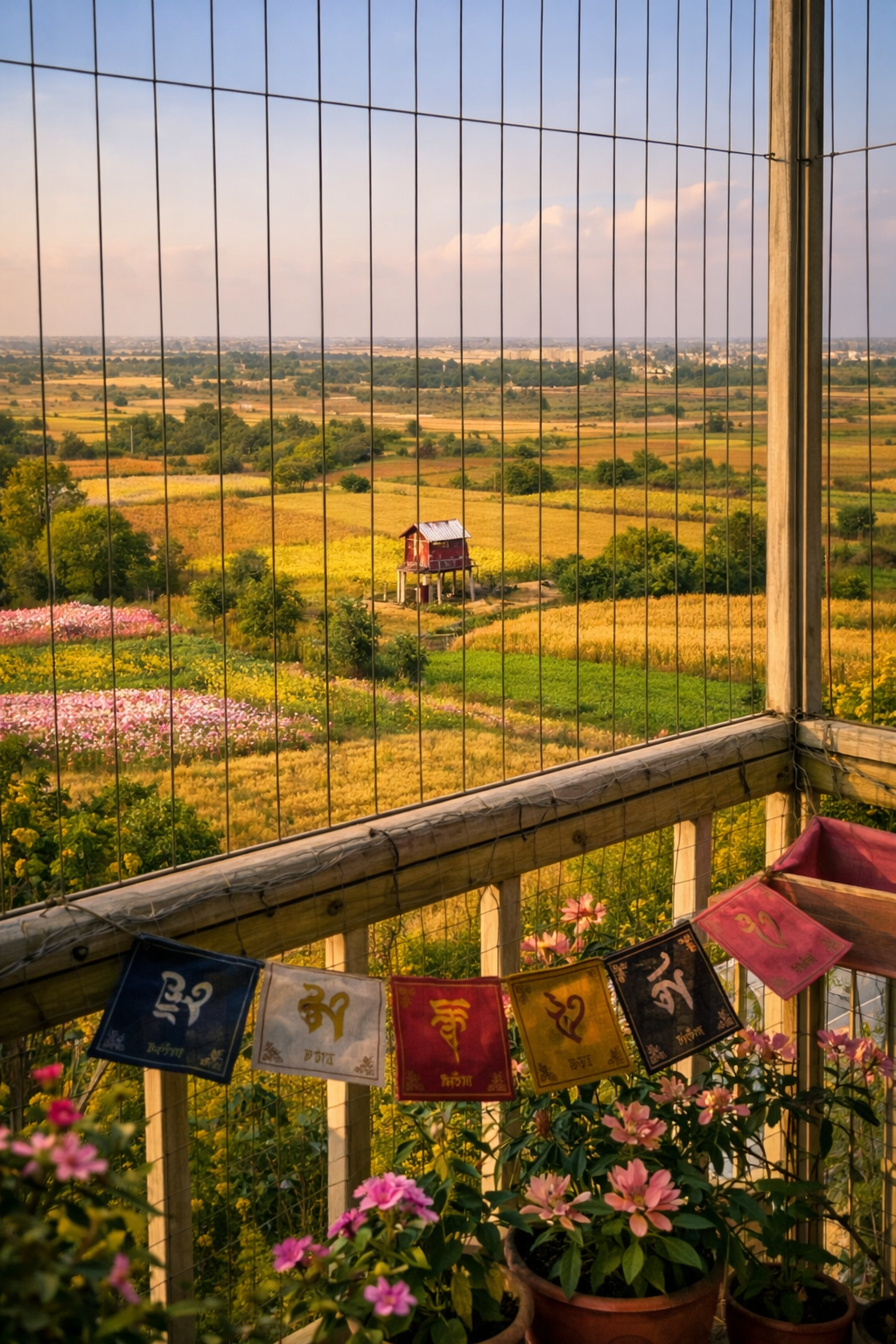
From the 16th floor of my balcony, I can see a small machan standing quietly between the fields.
It is nothing extraordinary. A simple watch hut. A raised structure in the middle of open land. The kind of place most people would glance at once and forget. But I keep looking at it. Beyond it, the double-decker maalgaadis move along the Delhi-Mumbai Freight Corridor like great iron thoughts that never stop. Between that tiny machan and those long freight trains, my entire life feels suspended.
I run my life from this floor.
From here, I take calls, answer clients, think of court dates, draft notices, chase deadlines, and live by lists. From here, I continue being useful, responsive, dependable, available. From here, I keep proving that I am a man fully inside his responsibilities. And yet, every now and then, my eyes leave the screen, cross the railing, pass through the safety net, travel over the buildings, and stop at that machan.
And a strange thought rises in me.
What if I am waiting for the wrong day?
I often imagine that someday, when the work is wrapped up, when the pending matters are fewer, when clients need less, when money anxiety softens, when duty loosens its grip, I will finally go toward that inner machan of mine. Maybe not this exact one in the field, but some version of it. A place where I will sit without urgency. A place where I will not be needed for the next hour. A place where I can exist without producing anything.
But lately another fear has started haunting that dream.
What if by the time I finally reach that day, I have already lost my senses?
What if I touch things and feel nothing? What if I smell flowers and nothing stirs? What if the sadabahar blooming near a railing, or the evening light falling on open land, or the sound of a passing train, or the silence of a field hut means absolutely nothing to me by then? What if all the waiting hardens me? What if years of postponed living quietly train the soul to stop responding?
This is not the fear of dying. It is, in some ways, more frightening than that. It is the fear of surviving into numbness.
We often imagine burnout as tiredness. But maybe real exhaustion is something worse. Maybe it is the gradual erosion of wonder. Maybe it is when beauty is still visible, but no longer reachable from within. The eyes work. The hands work. The schedule works. The person works. But the inner instrument that receives life falls silent.
That is what I fear.
Not that I will fail.
Not that I will have too much work.
Not even that I will never make it to Amalfi, or drive along the Indian west and east coast, or sit one day in some forgotten patch of land with the sky above me and no one calling my name.
I fear I will get there and it will mean nothing.
That the coast road will become just another road.
That Amalfi will become just another location.
That friendship will become memory without warmth.
That flowers will become color without fragrance.
That rest will arrive after the ability to enjoy rest has already left.
And then I ask myself a question that refuses to leave:
Do I have to wait for the day when everything is wrapped up before I go to the machan? Or is that exactly how one loses the senses by waiting too long?
Because the truth is, life never really wraps up. Work does not end with ceremony. It only changes shape. One file closes, another opens. One payment comes, another expense rises. One responsibility leaves through the front door while three more enter quietly from the back. If I keep telling myself that I will live fully only after completion, I may be making a bargain with an illusion.
Perhaps the day of total freedom is a lie hardworking people tell themselves so they can continue postponing joy with dignity.
And perhaps the senses do not stay alive automatically. Perhaps they must be exercised, like faith, like tenderness, like courage. Perhaps a person remains capable of feeling only by continuing to feel while life is still unfinished.
Maybe that is the real lesson of the machan.
That peace cannot be kept as a retirement plan.
That beauty cannot be deferred endlessly without consequence.
That if I want to one day enjoy a coast, a quiet drive, a field, a flower, a friendship, an evening in Italy, or simply an hour that belongs to no one but me, I must begin protecting my ability to feel now and not later.
Not in grand, dramatic rebellion. I am not talking about abandoning duty. I am talking about smaller acts of refusal.
Watching the field for ten minutes without multitasking.
Letting tea be just tea.
Taking one drive with no agenda.
Looking at flowers without photographing them.
Sitting with my son without also carrying tomorrow in my head.
Allowing one evening to remain unmonetized, unproductive, and unanswered.
These sound like small things. But maybe the soul survives on exactly such small things.
Maybe the person who will one day stand near that machan is being decided right now.
Maybe he is being built each time I refuse to reduce life to utility.
Or maybe he is being destroyed each time I say, “Later, when things settle.”
The balcony and the machan are not merely two places. They are two states of being.
The balcony is height, pressure, perspective, ambition, management, distance.
The machan is nearness, stillness, exposure, simplicity, and enoughness.
I need the balcony. It is where I have built, earned, struggled, and held together what must be held together. But I do not want to become a man who only knows how to live from balconies above life, overlooking it, organizing it, but never arriving inside it.
I want to still be able to descend.
I want that when the day comes whether it is in a field nearby, on a coastal road in India, on an evening in Amalfi, or in some ordinary hour I once would have ignored, I still have enough untouched self left to feel wonder.
The machan teaches me this from a distance: do not wait to finish life before you start inhabiting it.
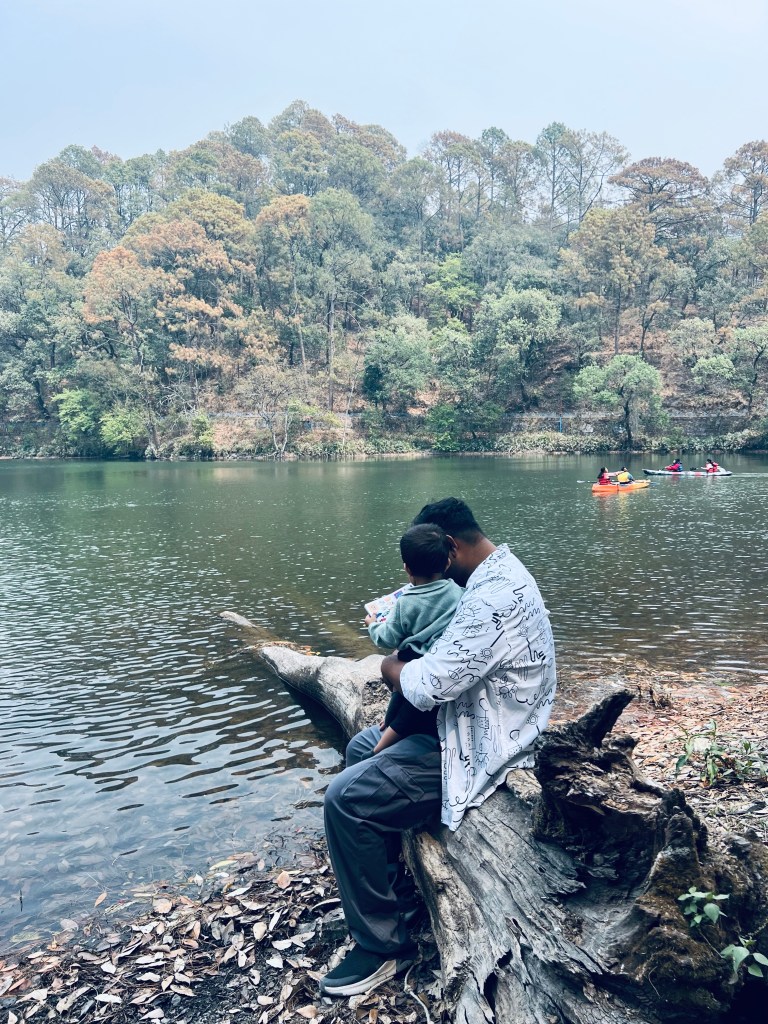
Because one day, if I am not careful, I may finally have the time I begged for and become a stranger to the very peace I wanted.
And that would be the saddest success of all.
Later.
 Expanding The Horizons